
Can China truly enforce the use of its upcoming CBDC?
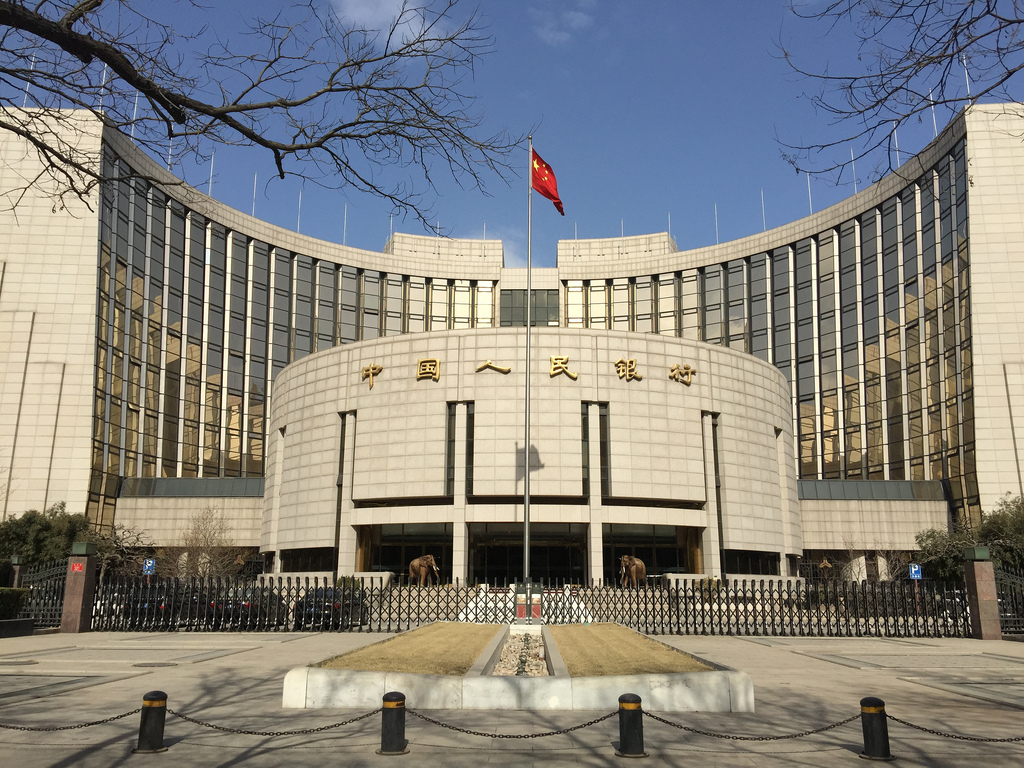
The People’s Democratic Republic of China is one of the countries known for its strict economic development plans. The difference between the economic powerhouse that China is and its neighboring countries as well as western nations is that the Chinese Communist Party, or CCP, likes to have as many strings to control every bit of the system as possible.
This becomes very visible when one takes a look at the digital currency laws in China. With decentralized cryptocurrencies like bitcoin (BTC) being straight-up illegal in the country the CCP is still pushing the idea to create its own Central Bank Digital Currency (CBDC) – digital Yuan. There has been an announcement by the People’s Bank of China (PBOC) stating that the whole ordeal is very close to its completion.
The prime example of the dislike of decentralized cryptocurrencies is, as it was already mentioned, the ban of BTC in China. This is due to the fact that the government cannot physically track the individuals making these transactions. While privacy and fewer taxes are a huge draw for people it is certainly not the intention of CCP to give such power to the population. A fair example of this is the nationwide ban on online gambling in China. The idea is that the business of casinos and online casinos has been monopolized by certain CCP affiliated members of the society and gambling, in general, is strictly prohibited in China. What people who wanted to play live roulette or any other games in the country have resorted to was using cryptocurrencies to make deposits on foreign online casinos. This way, the money transaction would not be visible to their government and thus the whole financial activity concealed. Now there are numerous other repercussions like the Internet Service Providers (ISPs) seeing what and where the citizens are accessing but there are ways to avoid this as well.
The idea is that the PBOC is going to be launching the digital yuan, a state-backed cryptocurrency, issuing it to 7 most reputable companies in the country. This was stated in an interview by Paul Schulte, who used to be the head of the global financial strategy department of China Construction bank up until 2012, that China Construction Bank, Bank of China, the Industrial and Commercial Bank of China, the Agricultural Bank of China, Alibaba, Tencent, and Union Pay will be the first 7 companies in the lineup to receive the digital yuan. These are one of the biggest public companies that are exploring and using Blockchain. Tencent, for example, is ranked number 45 on Forbes’ list.
It is rumored that the development of DC/EP (Digital Currency/Electronic Payment) is already finished. The idea is that apart from these 7 companies there may be the 8th one. The aim is to release the cryptocurrency for the 11th of November, which is one of China’s busiest shopping days known as Singles Day. After the launch, all of the companies will be responsible for delegating the digital yuen to the citizens of China. The CCP plans to eventually release the digital currency to other countries like the United States of America. Although we stand to see how that will work out due to the recent political developments. The Chinese government is constantly under scrutiny for their anti-consumer and privacy intrusive strategies. Much like all of the companies that are involved with the CCP the digital yuan can also become sanctioned by lots of different countries. It is one of the scariest moments in the financial history as the digital currency has until now been offering a huge benefit of privacy while in the hands of the Chinese government this option goes out of the window. There may be numerous ways for them to exploit people’s information including spying and collecting information about their payments.
Due to all of this, the digital yuan most probably is not going to be the cryptocurrency that we all expect it to be. It would mean for the Chinese government to relax their grip on the economy, which to put it frankly they just will not do. It will most likely become some kind of a digital payment system designed for Chinese social media and applications like WeChat and Alipay with the People’s Bank of China (PBOC) at the top to control and move the market as well as all of the attached strings in any way shape or form the government desires.
This is also in the face of the fact that utilizing public bitcoin is outlawed in China. Meaning that no matter how many times the Central Bank of China refers to their CBDC as a “national cryptocurrency” it just will not be. Since the public blockchain won’t be utilized this will tamper with the transaction speeds, network storage capacity, and etc. The digital yuan is expected to cater to every Chinese citizen meaning 1.3 billion people. It is a huge deal requiring crazy IT infrastructure. This means that the Chinese backed CBDC will utilize already existing systems and digital currency will end up giving CCP access to all of the financial information of their citizens. One of the ideas circulating around the Chinese CBDC is that the central bank will gain more direct control over consumers. While in normal circumstances banks make money and central banks control the supply in China’s case the CBDC will allow the central bank to just get by every other bank. This also gives them the ability to see exactly what the money is being spent on. Surveillance has one good side but a lot of bad sides. The idea is how much do you trust the existing government to not just block off your funds from you based on their social credit system? One-click and all of a sudden political opponents or anyone who the CCP deems unwanted can be locked out of all of their funds forever.
In the end, there are always trade offs when it comes to such initiatives. As with the development of facial recognition software and artificial intelligence which can be used in law enforcement to find missing persons and whatnot, it can also be used to track the political opponents and gather dirt on them. The Chinese Communist Party, unfortunately, is not above such unethical behavior.